Thursday, November 04, 2010

Films no longer have to be dubbed or subtitled into Ukrainian

http://www.hollywoodreporter.com/news/ukraine-ditches-controversial-dubbing-regulations-35092

MOSCOW -- The lifting of controversial dubbing regulations in Ukraine is likely to benefit Russian distributors.

Earlier this week, Ukraine's culture and tourism minister, Mikhail Kulinyaka, told reporters in Kiev that a regulation requiring that all movies slated for a theatrical release in the country, should be either dubbed or subtitled into Ukrainian, is no longer in force.

The regulation, which came into effect in early 2008, created a lot of controversy, especially in Ukraine's predominantly Russian-speaking eastern part, hitting those distributors which until then used Russian-language film copies. A few theaters even went on strike, protesting against the regulation, and there were reports about some theaters going out of business.

Now, Russian distributors operating in Ukraine will be able to save costs by again using Russian-language film copies. "There is a lot of Russian interest in the country, and what this is all about is re-distribution of revenues," Ukrainian television producer Igor Kondratyuk told Kommersant-Ukraine.

Labels: , ,

Tuesday, April 22, 2008

Lost in Bad Translation


Lost इन Bad ट्रांसलेशन
Russian dubbing sometimes ruins films. But that doesn't have to be the case. Marina Kamenev reports.
http://context.themoscowtimes.com/print.php?aid=184346
By Marina KamenevPublished: April 11, 2008
There are some voices that are suited to their foreign roles. "National Lampoon's Pledge This!" a movie starring Paris Hilton, is dubbed by Russia's own socialite bimbo, Ksenia Sobchak. And Pamela Anderson and Denise Richards in "Blonde and Blonder" are dubbed, most appropriately, by blonde Ukrainian pop star Olya Polyakova and by the blonder and more surgically enhanced television presenter Masha Malinovskaya.Those, however, look like rare examples of when dubbing gets it right in a country where dubbing on illegal DVDs ranges from the incomprehensible to the inaudible. Often, all the characters --male and female, young and old -- speak in the same monotonous voice of a middle-aged man.The combination of amateur translating and dubbing can lead to perplexing moments on screen.
One expat recalled how, in the cult U.S. series "Lost," the heroine, Kate, was telling another character that she was wanted. "Ya khochu [I want]," said the person reading over the film.But some studios and actors insist that dubbing can be done properly. Sergei Kazakov and Stanislav Strelkov both trained as actors and have been dubbing films for over 15 years.Kazakov, who has played everyone from Sylvester Stallone in "Rocky" to Robert De Niro in "The Godfather Part II," said that films are mostly dubbed because Russia does not have a culture of subtitles. "It's a well-read nation. People read so many books that when they come to the cinema, they want to switch off." Kazakov and Strelkov work with official studios and agree that the industry has changed over the last two decades. "Then [in 1991], dubbing had more significance. Before you even had a microphone in front of you, you would be assigned your role and watch the film. They would say, 'You are Stanley, you are Harold, you are Stella,' and then we would watch the film knowing who we were playing, go home, practice our lines and then perform them later."

Goblin (Dmitry Puchkov) is well known in Russia for his uncensored translations of leading English-language films and TV programs.


In the early '90s, new releases hardly made their way into Russia, and most of the films they dubbed were already well known. Today, for many actors, the first time they see the film is when their voice is already being recorded, which makes it more difficult. "You have to judge the personality and adjust your voice from a piece of paper," said Kazakov. Which means that even if movies are professionally dubbed, there is a lot of room for error.There are two ways of translating films from their original: voiceover , where the actors talk over the script, and the original language is still audible; and dubbing, where -- if it's done right -- the actors appear to be speaking in Russian."Dubbing is much harder," said Kazakov. "You have to read the script and determine the character's personality, their intonation, try and imagine the way they speak, their every cough. Everything has to be perfect," he said. Voiceovers are done slightly differently. "There are usually three people that do the voiceover for one film, two males and a female," said Strelkov, because there are more male roles in most films. "To be good at voiceovers, you have to be able to read quickly, have a good, clear voice, with a lot of range and have very good timing," Strelkov said.

Scope
Sergei Kazakov dubbed Robert De Niro in "The Godfather Part II."
Actors have to differentiate their voice when they are responsible for the sound of more than one character. "Sometimes it sounds like there are twenty people in the studio, and not three," said Kazakov. When dubbing, the film can be paused to fit the sentence in with the actors' words, but there is no such possibility with voiceovers, where the film has to play at its original speed while the voices are recorded."You don't need to act as much in voiceovers, because you already have a sense of the original actor -- the way they act, the way they sound," said Strelkov.
Translating voiceovers, however, is much more difficult, and it's a process that involves editing. "You have to translate the words not only so they make sense but so that they fit in and take up the exact amount of space as the original text," said Gennady Maksimov, an expert in the field of film translations. "With dubbing you can be creative, but the rules and parameters for voiceovers are much stricter."Maksimov usually works with French translations, but has also translated "The Godfather" into Russian."It's very difficult because its not just translating words: You have to make sure that things make sense culturally. Taking something that is American and making sure that every aspect of it will translate to a Russian audience is the real challenge."Russia's most famous film translator is Dmitry Puchkov, known as Goblin. He is notorious for not toning down the bad language from the original films, ranging from Guy Ritchie's "Snatch" to "The Big Lebowski." His aim, he said in an email interview, is to make the translation as authentic as possible.Puchkov said that a good translation requires expertise in a variety of fields, from medicine, to law, to astronomy. "The issue is not so much knowing English, as knowing everything that allows you to understand the original adequately enough to translate it into Russian."

Top Film Distribution

"Blonde and Blonder" is dubbed by Russia's own stars.
Puchkov said one of the reasons that dubbing is so awful is that the people doing it often don't care enough about the finished product. "It's obvious to everyone that American films are stupid. Any idiot can translate them, and in fact idiots are hired to do so. To this you can add the work of the actors who do the dubbing and don't care about the films, and the sound director, who decides how it should sound. As a result you end up with a totally different film, with different dialogues, different intonations, and different accents."Puchkov has a set method of translating. First he watches the film for understanding, then he consults a dictionary. "Where before you had a shelf of books, now you have the web." He then looks at specific clauses that may not be understood in Russia. "How to quickly explain what a famous company does ... what's funny about the last name of a comic character, what kind of details you need for translating jokes."
If there are things that Puchkov does not understand, he asks the author of the text. "I have never encountered a refusal for help."If a direct translation does not work, than Puchkov will work something different into the film. "Most jokes are a play on words, so translating them word for word is impossible. You have to make your own joke up, or insert an analogy," he said.While there are a lot of fans of Puchkov on Internet forums, not everyone is a Goblin follower. "I think only young people can possibly like his translations, because they are fascinated by the swearing, but it caters to the lowest possible audience," said Maksimov. "It's butchery. It's like taking Pushkin and interpreting it with some kind of modern, vulgar voice."Maksimov recalled trying to watch the Sopranos on NTV3. "The series said that it was a professional translation by Goblin, which I thought was the height of rudeness," he said. "It was insulting to the actors and to the profession of translating."
The fact that there is no professional training in the field of dubbing is, perhaps, the source of these conflicting ideas. This is a problem that Kazakov and Strelkov hope to solve next year -- by opening Russia's first school to teach trained actors how to do dub.

Labels: , , , , , , , , ,

Friday, December 07, 2007

To Dub or Not to Dub?


To Dub or Not to Dub?


http://www.film.com/movies/story/todubornottodub/11597472/17540523


To dub or not to dub, that is the question. And while it might seem like a no-brainer, depending on which side of the coin you reside on, it is actually a fairly complicated issue. I mean, I'm sure you're sitting there right now saying to yourself, "This guy's an idiot of course they should always…"
But always what? That's the real question. Both translate into box office; both have their fans and detractors; and both can radically affect your feelings on a film. Some people don't like to read a movie. Others don't think the mouth movements are more important than the content. So let's take a look at the pros and cons of the sacred arts of dubbing and subtitling.

Subtitling: The art of translating the words spoken as literally as possible and scrolling them along the bottom of the screen to convey them to an audience who speaks another language.Pros: This method gets the most literal translation (as there are no corresponding mouth movements to match the words with) and can easily explain complex concepts or ideas that often literally get "lost in translation" in dubbed films. Subtitling also can cover for bad or even downright lousy acting, as the audience can't understand the delivery of the line – only the context. This is the preferred method of viewing for cinephiles.Cons: Slow readers can miss entire patches of dialogue, or translations of fast-talking languages can get left behind entirely during long speeches and monologues. Comedy also doesn't translate very well, as the bonus of disguising a bad performance also manages to destroy a good or even funny one. Jokes are often funnier spoken than they are written. Oh, and subtitling a film means a very limited time at the box office unless the film is about one of two things - Kung or Fu.

Dubbing: The art of having new voices record the dialogue in a brand new language, often by rewriting the script to make the dialogue seem to match the mouth movements.

Pros: The method allows people to watch a foreign film just as they would watch one in their own native language. You can both take in the dialogue/story while watching the beautiful camerawork/cinematography. And comedies more readily translates across the language barrier. This is the preferred method of the mainstream, Middle American film watchers.


Cons: People chuckle when the mouth movement doesn't correspond properly to what's being spoken, so the dialogue is often truncated and occasionally completely changed. I've seen dubs in which the entire plot of the film is radically different than the original as a result of the ideas being too complicated to explain in the short time the dialogue allows. And wow, if you get bad or uninterested voice talentfor the dub, the movie can sound like a couple of high school students reading Shakespeare aloud in homeroom.


Me? I fall dead between both camps. While my favorite first viewing method is always subtitling, I admit I'll skip subtitled films once it hits around midnight – especially if I want to stay awake. But often times, once I've seen a film, I'll check out the dub just to admire the cinematography… and to see if I can watch the dub as the preferred method for that film.


Labels: , , , , , , , , , , , , ,

Monday, March 12, 2007

Simpsons' Spanish Voices Angry With Film


Simpsons' Spanish Voices Angry With Film
March 11, 2007, 5:43AM
MEXICO CITY — Mexican voice-over actors who have dubbed "The Simpsons" TV series into Spanish for 15 years are threatening to boycott the cartoon's upcoming movie if they are not hired to dub it.
Gabriel Chavez, the voice of Homer Simpson's boss Mr. Burns, told the Mexican newspaper El Universal that his union's voice-over actors were told they could work on "The Simpsons Movie" _ to be released worldwide this summer _ as a condition to the end of their strike in 2005.
"Gentlemen keep their word," Chavez told the newspaper.

He said that if Mexico's National Actors Association is not allowed to dub the film into Spanish, "there will be a boycott across Latin America of the film."

Chavez did not immediately return phone calls to The Associated Press seeking comment.
In 2005, the union went on strike to demand the series only hire its voice-over actors.
Officials at Gracie Films, which produces the series, and 20th Century Fox in Mexico, which distributes the program, could not immediately be reached for comment.

The prime-time animated series created by Matt Groening is now in its 18th season.

Labels: , , , , , , , , , , , , ,

Monday, January 22, 2007

French film-industry dubbers complain of pressure to water down scripts


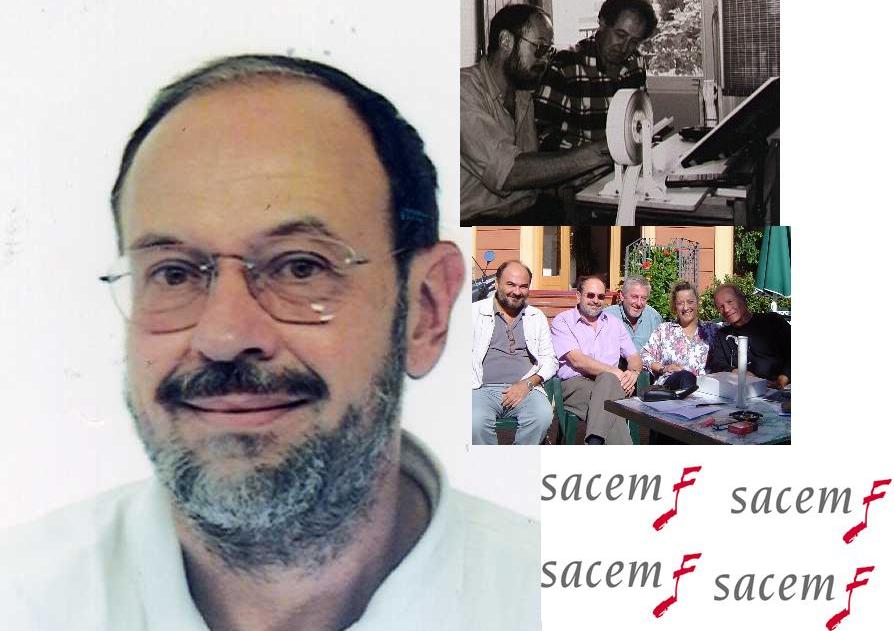
Jean-Louis Sarthou
president of the audiovisual commission for Sacem


French film-industry dubbers complain of pressure to water down scripts
By Doreen Carvajal
Published: January 21, 2007
http://www.iht.com/articles/2007/01/21/business/dubbing.php?page=1
PARIS: France may be the historic home of edgy auteur cinema, but its vibrant industry of dubbers and translators is in an uproar about pressure to scrub gritty American films and foreign television series by eliminating vulgar words, terms for alcohol or drugs and familiar brands like Coca-Cola.
With deft attention to proper lip-syncing — voilà! — a blunt-four-letter English expletive common in films like "Scarface" transforms into "ce n'est pas vrai," — or "that's not true."
Even the national bubbly synonymous with France gets transformed in a French version of a German series, "Verliebt in Berlin."
A character's ardent declaration, "I adore Champagne!" becomes the tepid "I would drink this again." Also lost in translation are drugs like cocaine, which is altered to "poudre," or "powder." Similar liberties are taken with the American show "Grey's Anatomy" when a doctor advises a patient to reduce stress with a daily cigarette. French translators transform the prescription for puffing into a daily bowl of rice.
"This is not just a French problem, but a problem of communication that is really serious," said Jean-Louis Sarthou, president of the audiovisual commission for Sacem, which represents the rights of writers. "This is a consequence of globalization. It's excellent that movies circulate around the world and give more work to translators. But unfortunately if a film works well, some people in the industry feel obligated to turn art into a product without problems."

This month, more than 200 translators and dubbers in the French film and television industry gathered for a discussion of the issue at an event organized by Sacem. Dubbing is an art regarded seriously in France, with some people collecting the signed photos of the French actors whose voices dub such celebrities as Angelina Jolie and Brad Pitt.
Dating to the 1930s, France has remained one of several West European countries, including Italy, Germany and Spain that dub the majority of American films with the voices of local actors. Less-expensive, subtitled productions are more popular in smaller countries.
In Italy, the practice started under conservative governments that sought to minimize outside cultural influences, including the transformation of non-Italian place names. The same tradition grew up in Spain under the dictatorship of General Francisco Franco, with foreign movies dubbed to reduce international influence, historians say.
With the rapid globalization of the film industry and the rising volume of movie production, veterans in the eclectic field of French cinema translation say that in the past five years they have faced increasing pressure to speed up their work and to follow an unwritten code to shun certain expressions and trademarks.
"Nothing is written in black and white because it would leave traces," said Vanessa Bertran, a translator for almost a decade for programs like "Sesame Street" and the American series "Vanished," noting that no one has issued a list of taboo words. "The problem is that we don't know who gives the orders because every time the blame is passed to somebody else. The companies who order the French version say they were asked by the television channels to do it and it's not us. Who is to blame in this story?"
In her own experience, Bertran said that the standards change constantly and that she has also been asked to make television programs more French, for example, by changing the name of the character Francesca in the Italian police series "RIS" to Françoise. Alcohol and drugs, she added, are particularly delicate subjects, with translators trading tales of particularly creative transformations. A word like "syringe," she said, was permissible if it was tied to a doctor, but forbidden if it was a drug user making the reference.
Then there are changes rooted more clearly in politics. When a character on the American show "CSI" warns darkly that "you'll end up roasting in the electric chair," the French translation is much more polite, "if you go to prison, you'll deserve it."
TF1, France's flagship television station that dominates the advertising market, broadcasts that series. It is most often criticized by translators and dubbers for being the most aggressive about changing dialogue to avoid offending a mass audience. TF1 did not attend the event organized by translators to discuss the issue.
But Boualem Lamhene, a Disney executive who manages the dubbing and translation side of the Buena Vista film unit in France, was at the debate. He said that what the industry needed was more openness and communication.
"We respect the original versions to the maximum," he said, noting that Buena Vista recently insisted on restoring some salty language for one of the "Pirates of the Caribbean" movies, even though Disney's consumer-products unit favored softer language. "We don't have a problem with slang or bad words. We try to employ the same terms and to respect the real voice in America."


Translators said they worked through intermediary companies carrying out the translation work for Disney. In the past few years, they said, these companies ended up trying to anticipate what the media giant wanted by eliminating references to religion, such as "My God!," or, in children's programming, softening wording related to death — "dead bird" becomes "oiseau malade" or "sick bird."
A spokeswoman for TF1 confirmed that the station has sought to eliminate the mention of some trademark names from some programs to conform with rules set forth by the broadcast regulator, CSA, to prohibit clandestine advertising. But a spokeswoman for CSA said the agency played no role in setting standards for the dubbing of foreign films and programming.
American script writers also note how U.S. and European standards differ on product placement.
"This is the problem inherent in the proliferation of product integration in American television and film," said Jody Frisch, a spokeswoman for the Writers Guild of America in California. "Writers and actors are often forced to endorse products with little or no control. Now translators are put in a difficult position because European law protects against the commercialization of content."
If there was a form of passive censorship, Lamhene, of Disney, pointed out that the writers were much more organized in France than in any other countries to raise their complaints.
Some of the words that they say are being censored still manage to surface in other ways. When the national daily, Le Monde, published a story about dubbing, a blunt-four letter English expletive still made it into the headline.

Labels: , , , , , , , , , , , , , ,

Monday, January 15, 2007

Dubbing, Doubling, and Duplicity

Dubbing, Doubling, and Duplicity


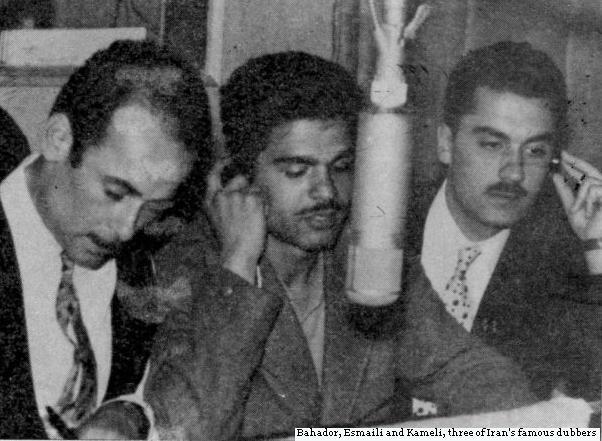
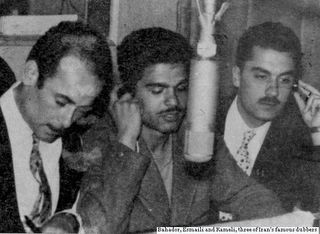
Bahador, Esmaili and Kameli, three of Iran's famous dubbers

Dubbing, Doubling, and Duplicity
http://www.pagesmagazine.net/2006/article.php?ma_id=7830018
By: Hamid Nafisi

“Don’t be alarmed,” said a voice, “None of your ventriloquising me,” said the tramp.
H. G. Wells, The Invisible Man

Dubbing is the unsung hero of the history of world cinema. By making the movies intelligible to world populations, a majority of which was illiterate, it contributed immeasurably to the spread of cinema as the most popular entertainment form. It also contributed to the rise of the national cinemas and film industries. And it introduced its own poetics and politics, which impacted how cinematic stories were told and were transformed.

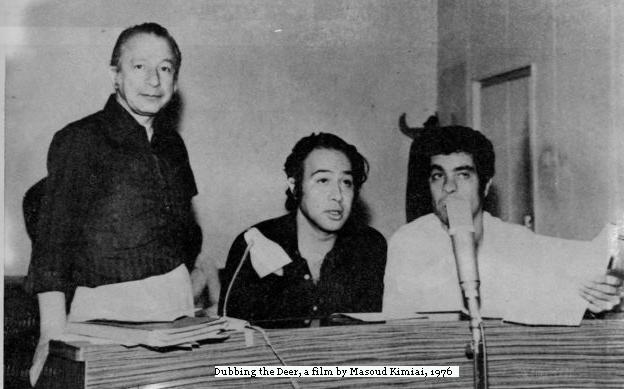
In Iran, dubbing was lynchpin of the hybrid production mode, and it took two chief forms. Dubbing involved an operation on foreign language movies by which Persian language dialogue replaced foreign language dialogue. Doubling involved an operation on locally made movies by which diegetic actors or voice doubles recorded the films’ dialogue in post-production sessions. The separation of the characters’ voices from their bodies broke the tyranny of sync-sound, which was the sound equivalent of invisible editing, the armature of classical realist cinema style. And it provided ample opportunities for a range of not only dubbing and doubling but also of duplicating and duplicitous practices, involving translations, mistranslations, substitutions, elisions, apparent losses, surprising gains, opportunistic accommodations, and censorship, contestation, and haggling of all sorts. As such, dubbing—the general term applied to both dubbing and doubling operations—is one of the most significant and signifying aspects of the pre-revolution Iranian cinema, during which it flourished.

Dubbing Foreign Movies

Ismail Kushan dubbed the first foreign language movie into Persian, but not in Iran. During World War II, he had joined the Nazi Ministry of Propaganda in Berlin as producer and announcer of Radio Free Iran’s Persian Service and as voice-over narrator of Persian language German newsreels, and he had played bit parts in German movies at UFA, the giant Nazi movie factory. His pro-German and anti-British broadcasts prevented him from returning home, forcing him to relocate from Germany to Turkey, where using Iranian students there he dubbed into Persian Henri Decoin’s French comedy Premier rendez-vous (1941) under the title Runaway Girl (Dokhtar-e Farari). Kushan had troubles finding women willing to act as voice-over artists, but finally he engaged Nurieh Qavanlu to dub the voice of the lead actress, Danielle Darrieux. In Turkey, he also dubbed a second movie, a Spanish song and dance item, La Gitanella, which he titled Gypsy Girl (Dokhtar-e Kowli). He carried both movies with him home at the war’s end, when he was allowed to return. He screened Runaway Girl for dignitaries and the general public in Tehran’s Crystal Cinema starting on April 25, 1946. The film’s 200,000 tumans box office and positive media publicity about Qavanlu’s dubbing of the French actress’s voice was very encouraging.

Kushan’s Mitra Films released in 1948 the first Persian language talkie made inside Iran. Called Tempest of Life (Tufan-e Zendegi), it was produced, photographed, and edited by Kushan and directed by the German-trained theater director, Mohammad Ali Dariabaigi. Kushan surmounted many production, technical, and personnel problems, as in an artisanal fashion he performed not only these but also many other un-credited tasks for the movie. The result was a melodramatic, musical tearjerker in which true love won over arranged marriage, and hard work and perseverance transcended class inequality. The film was first shown in Rex Cinema to dignitaries such as Ashraf and Abdolreza Pahlavi (Shah’s sister and brother), preceded by a newsreel about the opening ceremonies of the Royal Social Service Clinic, headed by Ashraf, which Kushan had filmed. The novelty of the first Persian-language sound movie made inside the country brought many enthusiastic spectators to the theater.

The overall success of the initial dubbed movies resulted in a flurry of activities to establish new dubbing studios to take advantage of the public’s fascination with Persian language foreign sound films. Between 1949 and 1954 at least 8 dubbing studios opened in Tehran and other studios were opened in Italy, which had an advanced dubbing industry. Together, these studios helped bolster the Iranian film industry and cinema. Dariush Film Studio in Italy, headed by the Armenian-Iranian Alex Aqababian, made a specialty of dubbing Italian movies into Persian for the Iranian market. For his first effort, The Story of Miserable Feraidun (Sargozasht-e Feraidun-e Binava, Le Meravigliose Avventure di Guerri Meschino), Aqababian not only translated the Italian dialogues into Persian but also Persianized the proper names of the characters, including that of the protagonist in the title. Its screening in October 1952 in Tehran’s Diana Cinema was so successful than within a week Park Cinema also began showing it.

The bulk of the dubbing took place inside Iran which, as Jamal Omid reports, by 1968 boasted some twenty-five dubbing studios, 240 dubbers (170 males and 70 females), and a professional Film Dubbers Union, which had began operation in 1965. Technical quality of the dubbed prints continued to be a problem as were some of the liberties the film importers, distributors, exhibitors, government censors, and dubbers took with the originals. Many of the technical problems were gradually overcome, but some of the aesthetic and ideological problems were exacerbated, leading to the emergence of certain poetics and politics. By the 1960s, foreign movie distributors and importers were providing dubbing studios with music and sound effects tracks that were separate from the dialogue track, allowing the voice-over artists to concentrate solely on their dialogue dubbing and the dubbed films to retain their original music and sound effects. Indeed, these voice artists became very proficient and prolific, the best of them specializing in dubbing the voices of several foreign movie stars. As a result of their success, the number of dubbed foreign movies shown in Iran continued to rise rapidly--56 films were dubbed in 1957, 119 in 1958, and 183 in 1959. By the end of the 1950s it was rare to encounter a foreign movie that was not dubbed.

Doubling Domestic Movies
Because of various production difficulties, almost all commercial features made in Iran were also doubled, that is, they were filmed MOS (without sound), with dialogues and sound effects both recorded and added in post-production. As a result, dubbing and doubling became lynchpins of the entire commercial film industry, impacting production, censorship, importation, distribution, exhibition, and advertising of the movies. The institutionalization of dubbing and doubling and their kin, lip-synching of actors to pre-recorded songs—as in Siamak Yasami’s Qarun’s Treasure (Ganj-e Qarun, 1965)—popularized commercial cinema movies and filmgoing and helped to improve both the technical capacity of the film industry and the construction of new moviehouses. However, it also had a profoundly negative impact on film production practices. One such consequence was that actors did not have to memorize their lines. This situation reinforced laziness, intuitive acting, spontaneous filmmaking, and the insidious idea that filmmaking was basically improvisational, requiring little preparation.

Until the end of the 1950s, Iranian actors had doubled their own voices in post-production , but from the 1960s onward—the emergence of the hybrid production mode—most of them abandoned this practice in favor of professional dubbers (called dublor from the French doubleur) doing their voices. These Professional voice-over artists were both specialists and generalists and they were also prolific. Some of them specialized in dubbing the voices of only certain foreign and domestic actors, while others dubbed and doubled many different voices. They often indigenized (Iranianized) the foreign actors and stars by putting Persian language expressions in their mouths—continuing the function of live screen interpreters (dilmaj). This was particularly true of the comics and of the strong character types, such as cowboys, tough guys, outlaws, and romantic heroes and heroines. Sometimes, these efforts at indigenization were inappropriate, as when dubbers spoke Burt Lancaster’s lines in a Persian Turkish accent or that of Tony Curtis’ in a Persian Rashti accent—both of which carried very specific cultural baggage not in the original. Also, because each voice-over artist usually dubbed and doubled the voices of several characters, foreign and domestic, strange transnational crossover resonances and dissonances would be set up between dubbed voices and screen characters and between original and dubbed films, which served to undermine the spectators’ mirror-phase identification with the foreign characters.

Thus, dubbing became, as Natasa Durovicova notes, the great equalizer, a “machine for processing differences.” Nonetheless, some critics, such as Amirhushang Kavusi, rightly condemned these efforts as fraudulent and unethical because they violated the “authenticity and integrity” of the original films. However, audiences, particularly those from the lower classes seemed to like such transformations and equalizations, as they would draw special pleasure from hearing John Wayne and Jerry Lewis use expressions that Iranian tough guys or comedians used. This sort of cultural hybridity, brought on by dubbing, on the one hand, subverted the original films and, on the other hand, endeared them to audiences whose film watching experience was thereby enriched. As a result, contrary to the pessimist culture industry critics, the “work” of these slippery and manipulative dubbing and doubling practices was highly ambivalent, ambiguous, and sometimes even counterhegemonic for instead of providing wholesale interpellation and identification with Western movies and cultures, they created new movies and an alienating sort of identification. In addition, however questionable some of the specific practices of the voice-over artists were, it is clear that by giving voice and personality to the actors and stars they brought them to life and provided incalculable service in popularizing cinema in Iran and in bringing enjoyment to audiences. Unfortunately, their individual services oftenwent unrecognized by both critics and audiences.

Dubbing is an unrecognized dimension of the orality of the Iranian cinema—and of the hybrid mode—for the oral tradition was strong enough among some of the voice-over artists to drive their practices. Many came from radio, the most oral of the mass media, and some from the theater. The comic radio actors, such as Hamid Qanbari, transferred their various radio personalities into their film dubbing, imbuing foreign actors, such as Jerry Lewis, with a new Iranianized personality beloved to audiences, who spewed specifically Persian expressions, or even jokes that were then current in Iran and on the radio. Thus, Jerry Lewis was always haunted by his indigenized double. As in Persian art music and oral storytelling, sometimes, the composition and performance of dubbing occurred at the same time. Dialogue translators and voice-over artists, forced to work within the confines of a time-based art such as cinema, resorted to improvisation and to the efficiency of inserting tried and true expressions in the mouths of the actors, much like oral poets who stringed together blocks of known formula phrases. Such reliance on improvisation and formula phrases probably aided the development, and the longevity, of typage in Iranian cinema. Once a type had emerged, such as country bumpkin, foreign bride, tough guy, or dandy, the voice artists ran with it. They did so by turning a foreign character into a local one, or by imbuing a local actor with more character than he visually displayed on the screen, or by typecasting him into a familiar, endearing, or tiresome character. The development of all the key characters of Qarun’s Treasure—Qarun himself, Happy Ali, Hasan the Rattler, Ali’s mother Zinat, Shirin, and Qarun’s purported Indian son, played by Ali—all owe something to these dynamics of orality, dubbing, doubling, and typage.

Finally, any dubbing is a form of translation and mistranslation, not just in linguistic terms but also in cinematic, sociocultural, and political registers. Like song and dance sequences, dubbing served narratively and politically important functions in the commercial cinema, which was bridled by heavy censorship. It offered the directors a second chance to smooth over their films’ narrative flaws and rough spots or to tie up loose ends. By adding a few words of dialogue or expository speech, they explained away or covered up ellipses, missing scenes, missing persons, or extraneous elements left in the movie because of improvisational filming. It also allowed them to censor their movies, papering over immoral relationships or politically sticky points. In this process, names of characters, lines of dialog, story lines, locations, and character relationships were manipulated and changed to make the films both palatable to public tastes and to government and religious censors. Through drastic manipulations of this sort during dubbing, sometimes, a tragedy would be turned into a comedy. Dubbing also served the causes of Iranian nationalism by encouraging linguistic homogeneity and reducing heteroglossia and the “Babel effect,” so feared by religionists and ultranationalists. This is how Persian became the dominant language not only of national cinema but also of television, all of whose programming—a large portion of them imported—were dubbed.

After the Islamic Republic, dubbing of foreign movies became more of a politico-religious instrument for censoring films, consciously employed to cover up scenes that due to their perceived immoral Western content or incorrect politics were altered or removed, creating new story lines, character relationships, and politics. For example, through dubbing and cutting, the sexual relationship of unrelated men and women in foreign movies—illegal in Islamic Iran—would be changed to sibling or friendly relations. Verbally, the lovers would be called brothers and sisters or friends, and to avoid incest taboos, images that suggested sexual relations would be removed by cutting. Such changes would have major repercussions for the entire movie, requiring many other changes to make the story seamless and coherent. Without those fine-tuning changes throughout, the movies’ intelligibility would be compromised, which was the case in many instances in the early days of the Islamic Republic. Similar strategies were applied to change and to manipulate the films politically. Because of its vast possibilities, dubbing provides a rich arena for deciphering the tensions of hailing and haggling, and of selfing and othering.

Doubling of the Iranian movies decreased enormously within a decade after the Revolution, as the government began to encourage sync sound filming by providing more funds, or more raw stock at lower prices, to the filmmakers who took that option. As a result, most of the art cinema films were shot with sync sound on location, a practice that enhanced the realism of the postrevolutionary movies.

Hamid Nafisi is Professor of Film and Media Studies, Department of Art History, Rice University, Houston, Texas. He has Published extensively about theories of exile and diasporic cultures, films and media; and Iranian, Middle Eastern, and Third World cinema.
(The copy right of the article 'Dubbing, Doubling, ' is held by its author.)


Labels: , , , , , , , , , , , , , ,

Tuesday, November 21, 2006

'To dub you have to be as good an actor. Or better'

'To dub you have to be as good an actor. Or better'

http://arts.guardian.co.uk/filmandmusic/story/0,,1937345,00.html

Kirsten Dunst earns millions for a film. But what about the actor who dubs her into Spanish? The world's top voice artists tell all - in their own words

Mexico's Kirsten Dunst: Claudia Motta
I began dreaming of acting as a little girl, watching Japanese cartoons. I fell in love with the voices. Later I got into radio and then into dubbing - and I love it. After I spoke Kirsten Dunst's lines in Spider-Man, they asked me to do Mona Lisa Smile, Wimbledon, and others. She's a favourite in my stable of characters now, and I'm so pleased things are going well for her in Hollywood. I don't imitate the actor, I get into the personality of the role. I focus on the gestures and reflect that in my voice, even if there was no sound in the original. I add to the drama because to dub well you have to be as good an actor, or better. They paid me 10,000 pesos (£500) for Mary Jane in Spider-Man. The problem is that distributors don't put us in the credits. Suppose Kirsten Dunst thought, "Gosh, how nice I sound in Spanish." She wouldn't have known who the voice belonged to.
Much of my work is for television. I'm best known for playing Bart Simpson for 10 years. When different actors were brought in because of a contract dispute, the public demanded we be brought back. Mexican dubbers mostly use a kind of neutral Spanish without accents or regional expressions so all Latin America can understand. We have the best dubbing industry, and the competition in Argentina and Venezuela just doesn't have our finesse or tradition. Top Cat in Spanish has a personality and feeling that is missing in English - and I take my hat off to the woman who voiced the witch in Snow White.

India's Arnold : Schwarzenegger: Pawan Kalra
I've done most of the big names: I was Arnold in The Terminator and True Lies; I voiced Owen Wilson in Shanghai Noon and Shanghai Knights; and Hugh Jackman in Van Helsing. A number of people say I look like Bruce Willis and I did Bruce as the cop in Sin City. I think Brad Pitt is one of the finest. I have just done him in Spy Games - a great film. Pitt is a very fine actor who can both overplay and underplay a role. You really have to watch how he speaks, it is fantastic.
Dubbing is an art requiring a voice of many textures and tones. Not everybody can do it just because they have a good voice. Voiceover artists are cast and we have writers who make the scripts fit the lip movements of the actors on screen so that it runs as smoothly as possible. There are sometimes arguments over how to translate a single phrase.
It is hardest with black actors like Eddie Murphy and Will Smith. They are not only very funny but they speak very, very fast. Trying to street talk quickly in Hindi is extremely tough. After two days your mouth gets really tired.
My brother was in the film business. I was running my father's transport company in Bihar, out there in the sticks. But I had done some performances, so my brother said: come out and try. So I did. And here I am, eight years later.
A film for TV takes two days. I will make 20,000 rupees (£250). For theatre release it is more like 50,000 rupees (£625). It's really exploding. I do films, commercials and TV shows now. There are a lot more people saying "I heard you on television" these days. But it's a really competitive industry. When I started there were just a few people - now everybody thinks they can voice movies.

· Interviews by Jo Tuckman, Angelique Chrisafis, John Hooper, Jonathan Watts, Jess Smee and Randeep Ramesh

Labels: , , , , , , , , , , , , ,

Germany's Julia Roberts: Daniella Hoffmann


Germany's Julia Roberts: Daniella Hoffmann


Germany's Julia Roberts: Daniella Hoffmann


It all started out with the casting for Pretty Woman back in 1990. Back then I didn't expect it to be a big deal - more like a B-movie. I was among the finalists and I think it was my laugh that clinched it. I can do a good, really filthy laugh just like Julia Roberts -I love it when she laughs. Since Pretty Woman I've played her in every film. My vocal range is very like hers, so it all comes pretty naturally. With Ally McBeal, whom I also dub, I put on a very different voice, much higher.
I don't often get recognised as being the voice of Julia Roberts. I think women's voices are much harder to identify than men's. But being Julia has definitely brought work my way. Some adverts want the sound of "Julia Roberts" and I have also done Charlotte's Web because it was originally Julia who did the voiceover.
When I come in to record I generally haven't seen the film I'm going to dub. It used to be different: we used to get the videos to take home beforehand. But these days they are amazingly strict about new releases. When I did a voice for Star Wars, I wasn't even told in advance what film we were doing - just to turn up.
But when I play Julia Roberts I don't need to prepare or anything. I follow her lead. I mean, the woman is a great actress, an Oscar-winning actress - why should I change anything about her work?

Labels: , , , , , , , , , , , , ,

China's Tom Cruise: Ren Wei


China's Tom Cruise: Ren Wei

China's Tom Cruise: Ren Wei

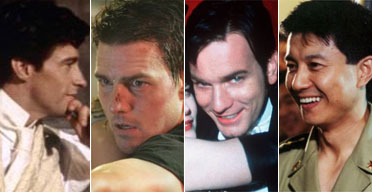
Tom Cruise was my latest voice acting role, but I have played hundreds of parts since I joined the Shanghai Film Dubbing Studio in 1986. I was Ewan McGregor in Moulin Rouge, John Travolta in Broken Arrow, Joseph Fiennes in Enemy at the Gates, Hugh Jackman in Kate and Leopold and Vincent Perez in Fanfan la Tulipe.
But my real dream is to become a tenor. Luciano Pavarotti is my idol and I haven't given up trying to get a role in a musical. I have a good voice, dancing skills, and acting experience. I just need a chance.
I guess I was chosen to voice the Tom Cruise role in Mission: Impossible III because my age and physique are similar to his. Some people say I even look like him from a certain angle. It was a tough job. While Atang [the Cantonese nickname for Tom Cruise] had months to make the film, I had to do the whole thing - from learning the script to dubbing all the lines - in four days. We always have to rush because of the piracy problem in China. If we don't get the translation and dubbing done quickly, an unauthorised version will be out on the streets before ours.
Every day I worked for at least 12 hours. I studied Atang's voice and tried to imitate his style of talking. It was an action movie, so there was lots of running about and shouting, which was hard to emulate in a studio. It was very intense and I had to cover a big range of emotions. In the fighting scenes, it was all "Get down, get down! Go, go!" Then there were romantic moments when his voice breaks up as he tells his wife how much he loves her. I had to watch the original English version time and time again to get the feeling right.
When it was all over I was so hoarse that the director told me to go home and take a rest. The crew cracked jokes: "Tom Cruise runs so fast he breaks his legs, Ren Wei shouts so loud he breaks his voice."
I have never used the fact that I am Atang's voice actor to chat up women, but I have received letters from fans who say they really like my delivery. But that is not what is most important. My main aim is to satisfy the original actor as much as the audience.

Labels: , , , , , , , , , , , , , ,